Week in Product #464 🚀
Revolut's $75B valuation, OpenAI's revenue bet, Opus 4.5 leads coding, autonomous robotaxis, AI-driven layoffs, writing effective evals, the future of PMs, virtual MCP servers & more

Hi friends 👋
Happy weekend, and happy long holiday weekend for those of you in the US. Tech doesn’t stop, so welcome to a new Week in Product!
🎰 The week in figures
$75B: Revolut has reached a $75B valuation after completing a long-running share sale
243M: Apple is set to surpass Samsung in smartphone shipments for the first time in 14 years, with 243M units projected in 2025. Driven by the iPhone 17 series, strong sales in the U.S. and China
220M: OpenAI projected that at least 220M people could pay for ChatGPT by 2030, up from 35M paid subscribers as of July, which could generate ~$59B to ~$64B in annual subscription revenue by 2030
6K: HP is cutting up to 6,000 jobs and ramping internal AI use in a cost-cutting plan it expects will save $1B annually by 2028
49 AI US startups have raised $100M or more in 2025 so far
📰 What’s going on
OpenAI unveiled its first ambient computing hardware prototypes with Jony Ive, targeting a two-year launch. “Ambient computing” hardware aims to keep a device close without demanding constant attention. Instead of filling a screen with apps or messages, the assistant listens for simple instructions and handles tasks quietly. The goal is a calmer relationship with information, something we actually need
OpenAI launched “shopping research” in ChatGPT, a mode that asks clarifying questions, crawls the web, and then returns a personalized buyer’s guide
OpenAI reports a data breach via Mixpanel, exposing limited customer info, but no passwords or payment details
Anthropic released Claude Opus 4.5. Opus 4.5 is now the top-performing AI for coding, agents, and computer use, at least according to Anthropic’s benchmarks. The model hit 80.9% on SWE-bench Verified, the gold standard for real-world software engineering tasks, edging out GPT-5.1 (76.3%) and Gemini 3 Pro (76.2%). Pricing dropped to $5/$25 per million tokens (input/output), making Opus-level capabilities way more accessible
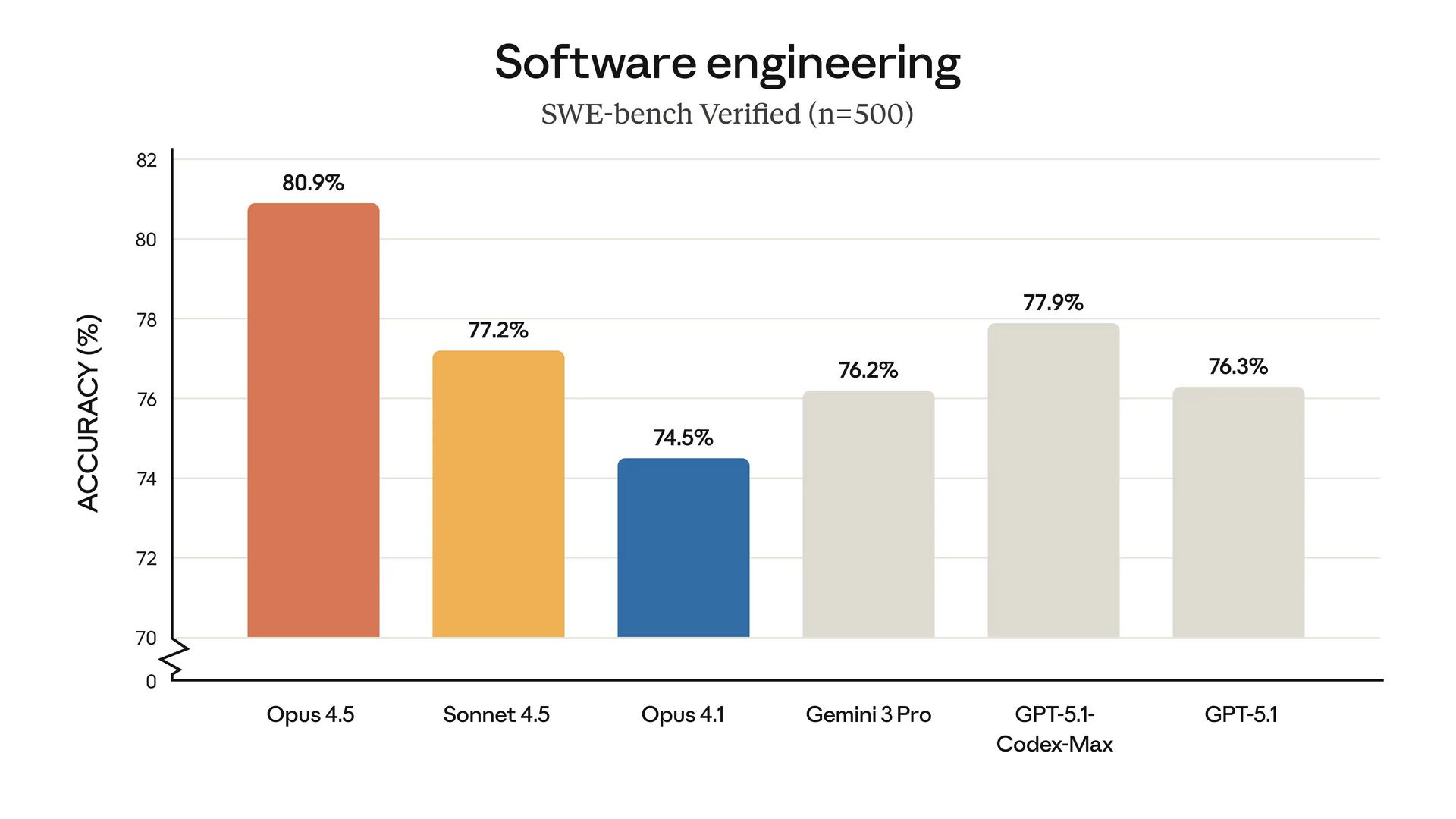
You can also now run Claude Code in the Claude desktop app (in research preview).
Workflow automation platform n8n announced a new version 2.0 with autosave, improved canvas, updated sidebar, plus a few more surprises. Scheduled for beta release on December 8th and stable release on December 15th
Amazon restricted select Black Friday deals to Prime subscribers, including the biggest discounts, aiming to boost customer loyalty and drive Prime memberships
Uber and WeRide are now offering fully autonomous rides in Abu Dhabi. As self-driving technology becomes increasingly common in select regions of China and the United States, MENA nations are also embracing it. And it appears that the economics of self-driving are improving rapidly: Pony AI’s Guangzhou robotaxi fleet just hit per-car break-even, nudging investor confidence after a choppy Hong Kong debut
Alibaba just dropped $500 AI glasses to go head-to-head with Meta. The lenses of the glasses are effectively screens, and the device has a camera built into the frame

📚 Good reads
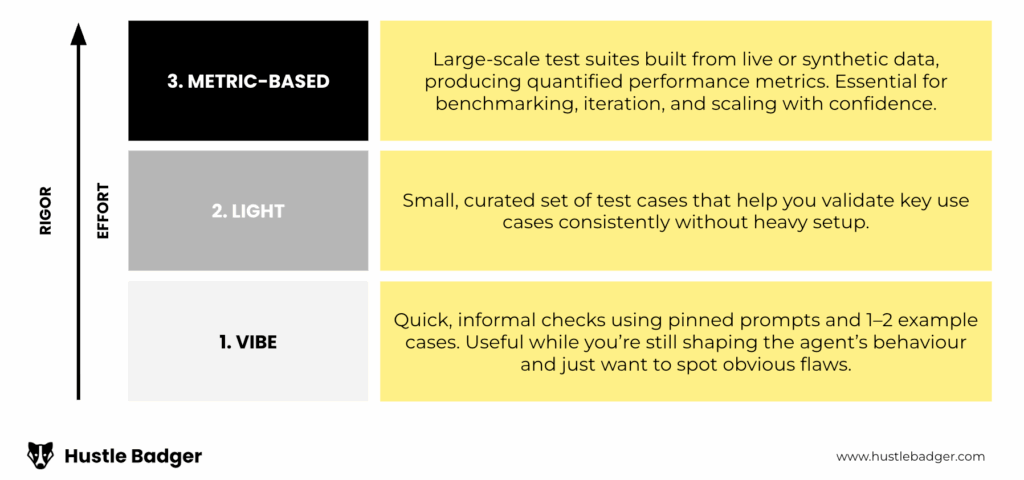
How to write effective AI evals. Ed Biden explains how evals are the QA for probabilistic systems: critical to iterate fast, catch non‑obvious failures, and benchmark agent quality. He suggests a maturity ladder: vibe checks → light evals → metric‑based suites combining code guardrails and LLM‑as‑judge tests
The art of “good enough” to beat FOBO. FOBO (fear of a better option) can keep us stuck comparing and second‑guessing, spiking stress and delaying action. Anne-Laure Le Cunff gives some great suggestions to get unstuck, ship faster, and learn
A two-step Nano Banana + Veo workflow to turn static images into playful animations. Jaclyn Konzelmann shows us how to quickly prototype infographics, diagrams, and whimsical animated scenes. The outcome isn’t perfect yet, but this is likely the worst these models will ever be!
Virtual MCP servers - a solution to a new problem. If you have used Claude or ChatGPT MCP servers, you may have noticed that the list of connected apps keeps growing, which requires us to be more selective when running prompts if we don’t want to spend too many tokens. Virtual MCP servers let you bundle only the tools a workflow needs (e.g., “salesforce-mcp” to retrieve case details, “jira-mcp” to create a ticket). This helps speed up agents and improves security by limiting access per role. It allows you to define a small set of tools per use case, route calls to the right backend (LinkedIn, Gmail, Salesforce, etc.), and share auth and auditing across virtual servers
What’s the future of PMs? David Pereira shares a nice reflection of how things are going for PMs in the advent of the AI-everything era. He argues the real PM edge is timeless skills: product sense, sharp prioritization, aligning teams around real problems,…. Tools can speed experiments, but not replace thinking. Vibe-coding won’t solve contradictory data or a messy strategy. Tools are means, not the end
That’s a wrap for this week! 🌟
I’d love to hear your thoughts on WIP. Reply to the email or drop a comment on Substack to share your take, and if you found this valuable, forward it to a fellow PM, Product enthusiast, startup founder, or entrepreneur who’d enjoy the read
More next week! 👋
Angel