Week in Product #465 🚀
Uber AI assistant, How Product leaders use AI, Kalshi mega-round, Google heats up the AI race, New AWS models and agentic capabilities, New Klarna memberships, Automating with AI & more

Hi friends 👋
Welcome to a new Week in Product!
Apologies for the delay this week. I had a busy weekend traveling around Chilean Patagonia, where I got to fulfill a bucket list goal and lifetime dream by competing in the ultra-triathlon race Patagonman. It was an epic ironman-distance race with a 3.8km swim between gelid fjords, a crazy 180km bike ride through the mountains, and a never-ending mountain marathon. Family a friends came to support, making it a very special event. Made it alive!

Now, writing from my flight back to NY, exciting product things:
🎰 The week in figures
$11B: IBM is acquiring Confluent for $11B to create a smart data platform for enterprise gen-AI
$5B: Databricks, the data analytics and AI company, is in talks to raise $5B at a $134B valuation. It serves 20k+ customers, including OpenAI
$1B: Kalshi, the prediction markets fintech, raised $1B at an $11B valuation, doubling its valuation in 2 months. It plans to expand into corporate risk management and partner with CNN for media coverage
800M: ChatGPT now serves 800M weekly users, with Enterprise adoption exploding 9x year-over-year. Weekly messages grew 8x since last November
$500M: Bending Spoons acquired ticketing platform Eventbrite for $500M, well below its $1.76B IPO valuation
$500M: Salesforce’s Agentforce AI surpassed $500M ARR with 330% YoY growth
$475M: Unconventional AI raised $475M at a $4.5B valuation to build a “more energy-efficient computer for AI”
$330M: Airwallex raised a $330M Series G at an $8B valuation. A 30% jump from the round 6 months ago. More than $1B will be deployed over the next 4 years to scale operations, hire AI talent, and accelerate product development
$300M: Black Forest Labs, the AI imagery startup and xAI partner, raised a $300M Series B at a $3.25B valuation
$200M: Anthropic has signed a $200M multi-year partnership with cloud data company Snowflake to integrate its Claude models directly into the Snowflake Intelligence platform
$160M: Harvey, the Silicon Valley-based AI startup for law firms achieved an $8B valuation following a $160M Series F. Surpassed $100M in ARR
$130M: 7AI, the cybersecurity startup, raised $130M Series A to advance AI security agents
90%: Google DeepMind’s latest AI weather model beat the world’s best traditional forecasting system on over 90% of metrics, predicting conditions up to 15 days ahead
6%: OpenAI has reportedly lost 6% of its users to Gemini in a week
📰 What’s going on
Anthropic is launching Claude Code in Slack as a research preview, letting developers delegate complete coding tasks directly from chat threads. The tool uses conversation context, like bug reports, to automate entire workflows
Anthropic has acquired Bun, a fast JavaScript runtime, to enhance Claude Code, which recently reached $1B in run-rate revenue. This aims to boost performance and capabilities for AI-led software engineering. Terms undisclosed
Anthropic is also prepping an IPO. The company has engaged law firm Wilson Sonsini to help them prep for a massive IPO, which could land as early as Q1 2026. Anthropic is also seeking a new round of private funding, at a valuation that could be above $300B
OpenAI partners with Instacart. Users can ideate meals, shop, and order grocery delivery from inside the ChatGPT app. OpenAI hails the collab as its first ChatGPT-native “checkout experience”
OpenAI is set to acquire Neptune, a startup focused on AI model training tools. This move aims to integrate Neptune’s monitoring and debugging capabilities into OpenAI’s training processes. Terms undisclosed
OpenAI is testing “search ads” and sponsored carousels inside the ChatGPT Android beta, signaling that an ad-supported model is coming to the chatbot’s billion-user scale and raising fresh concerns over how conversational search gets monetized
The MCP-UI open source project, Anthropic, and OpenAI announced MCP Apps: the standardized form of OpenAI’s Apps SDK we’ve been waiting for, allowing for the embedding of interactive UI widgets inside AI chat and agentic workflows. With Anthropic seemingly on track to adopt it in their products, there seems to be no doubt that “UI in MCP flows” will become a permanent staple in the ecosystem
Google also told major ad buyers it plans to roll out ads inside Gemini in 2026; the first time it has directly briefed advertisers on monetizing Gemini
Google launched Gemini 3 Deep Think mode for Ultra subscribers, enhancing complex problems through parallel reasoning and new scientific applications
NotebookLM now generates full presentation decks from your documents: upload research papers, reports, or articles and it creates polished slides that summarize your content, though current slides are images (editing tools coming soon)
Google unveiled Workspace Studio, which allows users to create AI agents that automate every day workflows. E.g. you can create an automation that summarizes action steps following a meeting by connecting Google Calendar with Gmail, or an automation that saves email attachments to Google Drive. These automations are firmly integrated into products like Gmail, where users can open them up in a side panel, just as you do with its other tools. Studio can also connect to external apps like Asana, Jira and Salesforce, which could come in handy for product teams
Google has announced plans to release its first AI-powered glasses in 2026. The devices come with audio-only glasses by the Gemini assistant and a model with an in-lens display. The company is partnering with Samsung, Gentle Monster, and Warby Parker on design and manufacturing, backed by a $150M commitment. The glasses will run on Android XR and aim to compete directly with Meta’s Ray-Ban AI line
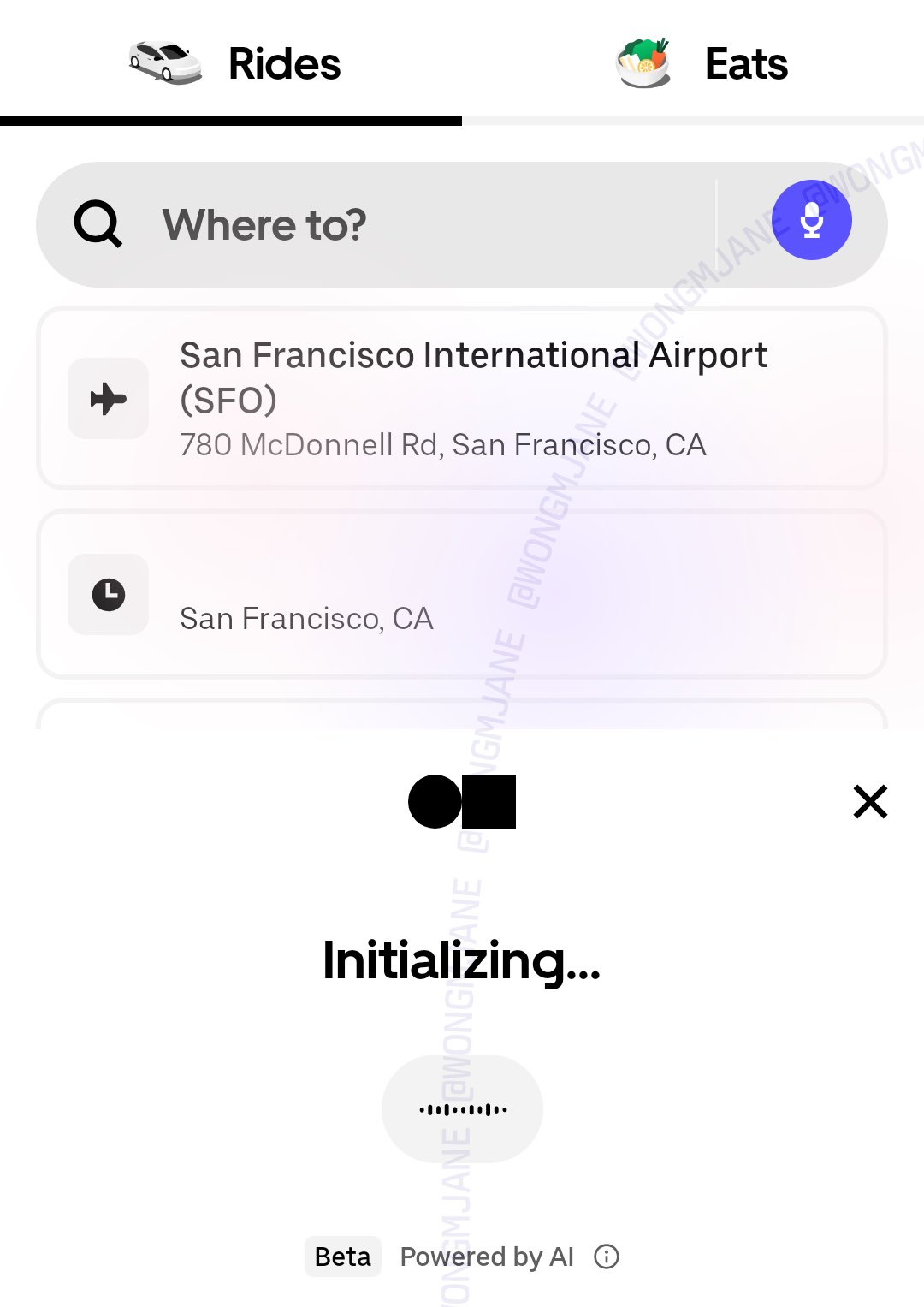
Leaked UI screenshots suggest that Uber is working on a new AI Assistant. This new Assistant will be bolted onto the existing search screen to allow for conversational input as well as traditional search
Meta has acquired Limitless, the AI hardware startup behind a pendant that records and transcribes real-world conversations. The company will stop selling devices and move its team into Meta’s Reality Labs division. Terms undisclosed
AWS announced 29 agentic AI capabilities for Amazon Connect at its re:Invent conference, featuring fully autonomous AI agents that can handle complex customer service requests across voice and chat channels without human intervention
AWS also introduced new Nova models and Nova Forge, a program that lets enterprise clients customize Amazon’s AI models midway through training for $100K annually. It gives a more reasonable path for organizations that want to integrate proprietary data earlier in model development without building from scratch
Mistral introduces new models: the Mistral 3 family of open-source models. The 3 series can operate on mobile devices with limited network connectivity. The company is aiming for a future in which “ubiquity” is paramount and users will want to access AI on their phones and in the cars locally
Lovable launched a new Home dashboard which simplifies creating projects and lets you pick your own gradients. Navigation is simplified with a clearer sidebar for jumping to key pages and a global search with Command K lets you find anything from anywhere, and even create projects directly
Runway launched a new text-to-video model: Gen4.5. It’s taking the top at leaderboards, and competes directly with offerings from Google and OpenAI
Klarna is rolling out its new Premium and Max memberships in the US, offering lounge access and premium perks without spending requirements
📚 Good reads
Google, Nvidia, OpenAI, and AI moats. Ben Thompson explains how Google’s Gemini 3 and TPU deals put real pressure on Nvidia’s margins and OpenAI’s model lead. OpenAI’s edge is its massive ChatGPT user base, but subscriptions alone won’t fortify the moat. Without an ads model, Google’s scale and monetization could grind down OpenAI’s consumer lead
Marketplaces in the Age of AI, by Olivia Moore. AI isn’t birthing net-new marketplace types (so far); it’s making old, tough categories workable by fixing matching and ops with agents and automation. For PMs, the opportunity is to target “stalled-at-scale” markets, upgrade unit economics with AI middlemen, and reshape value props for buyer trust and supplier loyalty
How to choose which tasks to automate with AI (+50 examples). Teresa Torres shows how to decide what to automate vs. augment, using simple questions about frequency, enjoyment, complexity, judgment, and risk. She also shares concrete workflows (writing, research, podcasting), a prioritization lens, and a nudge to ask “how can AI help with this?” every day
Daily feature shipping at Ramp. Ramp ships a major feature every day, using an opt-in early access tier to maintain speed without risking quality. About 10% of customers (+5k businesses) join early access, giving teams strong signal before general release. A lightweight, mostly AI-automated template drives release readiness, and leaders have 48 hours to review or it ships
How Product leaders should use AI, with Webflow’s CPO. Rachel Wolan lays out a practical, agentic workflow: calendar and email triage agents + real-time analytics via Claude Code tied to Snowflake. She also shows how to shift orgs to AI-native work with access, builder days, and career ladders. Complement with this piece by Google’s AI product lead Marily Nika, who shares a practical, end-to-end AI workflow
[Podcast] Why LinkedIn is replacing PMs with AI-powered “full-stack builders.” LinkedIn’s Full Stack Builder model swaps siloed PM tracks for builders who code, design, and ship end‑to‑end. Their takeaway for PMs: lean into AI, build gold examples, and focus on human skills like vision and judgment
The AI PM stack - updated. Aakash Gupta shares a revised list of curated AI essentials for PM. Things are moving fast!

That’s a wrap for this week! 🌟
Next edition will be a bit shorter, given I’m just sending this out on a Tuesday already.
Thanks! 👋
Angel